Love

The time to make up your mind about people, is never.

Philip Barry

In 1938, playwright Philip Barry grew concerned for his friend Katharine Hepburn. The actress had long been self-critical, and shortly after starring in “Holiday” — a film adapted from one of Barry’s plays — she was put on a list of performers considered to be “box office poison.” To help audiences start rooting for Hepburn, Barry wrote the leading part in his new romantic comedy, “The Philadelphia Story,” specifically for her. The Broadway production was a huge hit, resulting in a classic 1940 film where Hepburn reprised her role, opposite Cary Grant and Jimmy Stewart. Hepburn’s Tracy Lord, an independent divorcée, utters this line on the eve of her second wedding, foreshadowing her decision to find an alternate groom. Barry suggests that people can always surprise you, an idea Hepburn epitomized with her career. She remains the only actor, female or male, ever to win four Oscars.

Philip Barry
Philip Barry
Playwright (1896-1949)
See All Quotes
Advertisement
Advertisement
Happiness

A happy life neither resembles a rapid torrent, nor a standing pool, but is like a gentle stream, that glides smoothly and silently along.

Epicurus

This quote from the ancient Greek philosopher Epicurus says a lot about his namesake system of philosophy, Epicureanism. Epicurus believed the goal of human life is a sense of happiness, characterized by the absence of physical pain and mental disturbance, and that unhappiness comes from negative thoughts, needless guilt, and the fear of things we can’t control, including death. 

Epicurus rejected the idea of an afterlife, arguing that the soul doesn’t continue to exist after our demise, and that death was something that “gives no trouble when it comes, [and] is but an empty pain in anticipation.” However, despite his belief in the pursuit of pleasure and comfort, Epicurus was not an out-and-out hedonist. Epicureanism entails a preference for sustainable, simple pleasures and a degree of balance — the gentle, gliding stream — rather than the more intense torrents of excessive indulgence.”

Epicurus
Epicurus
Greek philosopher (341-270 BCE)
See All Quotes
Advertisement
Advertisement
Hope

Fear builds its phantoms which are more fearsome than reality itself.

Jawaharlal Nehru

Jawaharlal Nehru was India’s first prime minister after the country became independent in 1947. A longtime activist for Indian independence, he was imprisoned eight times over the course of 24 years. Nehru often described British rule as perpetuating a climate of fear, and he sought to give citizens relief from the years of political turmoil. He spearheaded social reforms, brought widespread industrialization to India, and emphasized community and social responsibility. His words here remind us that fear can blind us to the reality in front of us, and we can achieve great things by not letting fear win.
Jawaharlal Nehru
Jawaharlal Nehru
Former prime minister of India (1889-1964)
See All Quotes
Advertisement
Advertisement

When Charlie Chaplin wrote the script for his 1940 film “The Great Dictator,” he was making a bold choice. At a time when Adolf Hitler was in full power, the beloved filmmaker and comedian used satire to stand up for humanity and freedom. Chaplin included this line in the famous speech given at the end of the film. It’s an appeal to prize unity over hate in order to overthrow oppressors and live freely. The sentiment remains significant today: In a world that prizes power and success, it reminds us to value peace, kindness, and empathy.

Charlie Chaplin
Charlie Chaplin
Oscar-winning actor and filmmaker (1889-1977)
See All Quotes
Advertisement
Advertisement
Motivation

Ruptures almost always lead to a stronger project.

Anne Carson

Acclaimed writer Anne Carson is as well known for her translations of ancient scholarly texts as she is for her own experimental written work, which often weaves together poetry with essay and even opera, rock, dance, and other mediums. A veteran collaborator, she has worked with the likes of Lou Reed, the Merce Cunningham dance company, and what, for some, could be the most challenging collaborator of all: her husband (Robert Currie, a visual artist). But Carson resists the idea that collaboration could lead to irreparable differences, disagreements, or fallings-out. Asked what she does when a rupture arises, she replied, “Simply do something else and return to it later to find the problem wasn’t a problem at all.” Obstacles, for Carson, are simply opportunities to think about the work in new ways.

Anne Carson
Anne Carson
Canadian poet and essayist (1950-present)
See All Quotes
Advertisement
Advertisement
Love

The one who plants trees, knowing that he will never sit in their shade, has at least started to understand the meaning of life.

Rabindranath Tagore

Few artists exerted more influence in early 20th-century India than writer and painter Rabindranath Tagore. A persuasive advocate for Indian independence, he did not live to see the 1947 milestone achieved. Yet following the example set by his father, Maharishi Debendranath, Tagore devoted his years to benefiting future generations. On the site of his father’s meditation center in Santiniketan, India, Tagore created an experimental school with five students and five teachers. That school blossomed into Vishva-Bharati University, now a century-old public institution with an enrollment in the thousands. As his quote implies, no legacy is more worthwhile than bettering the world for others.

Rabindranath Tagore
Rabindranath Tagore
Indian poet (1861-1941)
See All Quotes
Advertisement
Advertisement
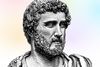
Displaying incredible perseverance, Mary Lou Retton overcame injury and etched her name into the annals of history in 1984 as the first U.S. Olympic gymnast to win individual all-around gold. Retton’s feat — accomplished on home soil at the Los Angeles Summer Games — won the heart of a nation and even earned her a coveted spot on Wheaties cereal boxes. In her post-athletic career, she pivoted toward sharing the philosophies behind her success, including the power of positivity. Maintaining a can-do attitude is contagious, and will attract opportunity, joy, and the kind of people who can boost us up.


Mary Lou Retton
Mary Lou Retton
Olympic gymnast (1968-present)
See All Quotes
Advertisement
Advertisement
Hope

It takes time to live. Like any work of art, life needs to be thought about.

Albert Camus

A French Algerian philosopher and novelist best known for works such as “The Stranger” and “The Myth of Sisyphus,” Albert Camus often explored absurdism and the human search for meaning. This line comes from his novel “A Happy Death” (“La mort heureuse”), written in the 1930s but published posthumously in 1971. In it, the protagonist struggles with how to live fully and intentionally in the face of mortality, and this reflection eloquently captures that pursuit. Camus suggests that living well is never accidental — it requires reflection, patience, and a willingness to approach life as a craft to be shaped with care. His words remind us that pausing to reflect on the meaning of our days and the course of our lives is a practice that allows us to live with greater purpose.

Albert Camus
Albert Camus
French philosopher and author (1913-1960)
See All Quotes
Advertisement
Advertisement
Wisdom

Let us not go back in anger or forward in fear, but around in awareness.

James Thurber

These words conclude the foreword to 1961’s “Lanterns and Lances,” the last essay collection author James Thurber published during his prolific career. Although the writer and cartoonist’s work inspired the annual Thurber Prize for American Humor, here he expresses a sincere desire for his readers: Don’t let past disappointments color how you see the world. When entering any situation, assuming the worst suspends our ability to access authentic emotions, and, as a result, to make clear-eyed, open-hearted decisions. By contrast, Thurber asserted that his creative life was guided by “a basic and indestructible thread of hope.”

James Thurber
James Thurber
Writer and cartoonist (1894-1961)
See All Quotes
Advertisement
Advertisement
Motivation

Talent is a pursued interest … Anything that you're willing to practice, you can do.

Bob Ross

American painter and art instructor Bob Ross is most famous for his long-running PBS show, “The Joy of Painting,” which aired from 1983 to 1994. With his gentle demeanor, quirky charm, and Zen-like approach to painting, Ross captivated audiences of all skill levels as his soothing voice guided them to paint beautiful landscapes full of “happy little trees.” Along the way, he imparted many messages that struck a chord with viewers and continue to resonate even now. This quote from the show underscores Ross’ unwavering belief that artistic ability hinges more on diligent practice than innate talent. He maintained that anyone willing to invest time and effort in their desired talents could achieve their goals. Since his death in 1995, the internet has helped cement Ross’ status as a pop culture icon with a remarkable legacy built not only on his artistic skills, but also on his gentle, encouraging persona.

Bob Ross
Bob Ross
Painter and TV personality (1942-1995)
See All Quotes
Advertisement
Advertisement