
Wisdom

Men who are in earnest are not afraid of consequences.

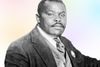
Marcus Garvey

Jamaica-born Marcus Garvey (1887-1940) was a civil rights activist and Black nationalist whose views often incited backlash. A public speaker and advocate, he led the Pan-Africanism movement, connecting people of African descent worldwide. However, his activism made him a target of the Bureau of Investigation (later known as the FBI), resulting in his arrest and controversial 1923 conviction for mail fraud. Garvey continued to write papers even from prison, and after he was released, he went on to speak to the League of Nations about race. Garvey’s lifelong dedication shows us that committing to a cause can offset our fears and empower us beyond our imagination.
Marcus Garvey
Marcus Garvey
Political activist and Black nationalist leader (1887-1940)
See All Quotes
Advertisement
Advertisement
Motivation

One must go on working silently, trusting the result to the future.

Vincent van Gogh

Though the Dutch painter Vincent van Gogh is now considered a master, he was essentially unknown in his own time. Of the more than 1,500 pieces of art he made over the course of his life, he sold only one piece. But in the century-plus since his death, the artist’s innovative, deeply emotive style has garnered acclaim the world over, and his paintings hang in museums from MoMA to the Louvre. Van Gogh’s story urges us to play the long game: Though we may not see our work pay off right away, the effort we put in adds up over time, leading us to our goals whether we can immediately see the path or not.

Vincent van Gogh
Vincent van Gogh
Dutch postimpressionist painter (1853-1890)
See All Quotes
Advertisement
Advertisement
Love

It's one of the greatest gifts you can give yourself, to forgive.

Maya Angelou

The poet Maya Angelou was 8 years old when she suffered a trauma that left her ashamed of her own voice, and caused her to go mute for nearly five years. “I thought I would never speak again,” she recalled years later. For her, the process of self-forgiveness was a process of recognizing the power of her own voice. Finding her voice saved her — and continued to save her. “All these 60-odd years later,” she said in 2010, “if I am really shaken, I stop speaking — and I, then, bring myself out. I start. I sing. I speak. I speak loudly and firmly. Recite Poe and Shakespeare and James Weldon Johnson, and all, and all, and do it.”

Maya Angelou
Maya Angelou
Poet, author, and civil rights activist (1928-2014)
See All Quotes
Advertisement
Advertisement

In Zora Neale Hurston’s 1937 novel “Their Eyes Were Watching God,” the main character, Janie, recounts the story of her marriages and journey to self-confidence. She tells a difficult tale, suffused with both joy and pain. Throughout Janie’s tribulations, she learns that the reasons behind some events don’t make themselves known immediately. You may be thrust into a confusing situation, but trust that the meaning of it — and the lessons it has to teach — will reveal themselves in time.

Zora Neale Hurston
Zora Neale Hurston
Writer and anthropologist (1891-1960)
See All Quotes
Advertisement
Advertisement
Motivation

Yield not to misfortunes, but advance all the more boldly against them.

Virgil

Considered the greatest poet of ancient Rome, Virgil is best known for his epic poem “The Aeneid,” where this quote originates. In this section, the titular Trojan hero Aeneas meets the Sibyl, a guide to the underworld. She gives Aeneas guidance on his journey and reassures him that despite past setbacks, he will eventually fulfill his destiny of finding a new home for the Trojan people. Thousands of years later, we can still take the Sibyl’s words as encouragement to meet challenges head-on. When we face difficulties instead of avoiding them, we’re more likely to learn something and be able to move forward.

Virgil
Virgil
Ancient Roman poet (c. 70-19 BCE)
See All Quotes
Advertisement
Advertisement

Abolitionist and author Frederick Douglass was devoted to the pursuit of truth: He published two autobiographies on his life in slavery, and was the founder and publisher for The North Star, an anti-slavery newspaper. Douglass was a lifelong advocate for the rights of Black Americans, serving as the first Black U.S. Marshal and on the board of trustees of Howard University. He spoke these words at the unveiling of a monument to Abraham Lincoln, explaining that it is important to recognize the shortcomings of Lincoln’s tenure alongside his accomplishments. Douglass reminds us that while the truth may not always be comfortable, we gain great insight from understanding the nuances of reality. 

Frederick Douglass
Frederick Douglass
Abolitionist and orator (1818-1895)
See All Quotes
Advertisement
Advertisement

Today, we think of Eleanor Roosevelt as a strong and fearless role model. The longest-serving First Lady of the United States, she transformed the role, taking on more leadership and political responsibility than any before her. In her autobiography, though, she described her younger self as timid, afraid of the dark and of punishment, and longing to be loved. It was only in adulthood, repeatedly facing what frightened her, that she learned, “once you have met it and lived through it you find that forever after you are freer than you ever were before.” It's a sentiment similar to one her husband famously expressed: “The only thing to fear is fear itself.” The difference is in the freedom she describes: “You gain strength, courage, and confidence by every experience in which you really stop to look fear in the face.”

Eleanor Roosevelt
Eleanor Roosevelt
Humanitarian and former U.S. first lady (1884-1962)
See All Quotes
Advertisement
Advertisement

Satirist and poet Jean Antoine Petit-Senn lived in Geneva during the 1800s and spent his days writing sharp satirical commentary. As is the case with many poets, Petit-Senn’s work was not fully appreciated until after his death, leaving him with little financial success during his lifetime. But as he states in this quote, “abundance” need not be measured by the amount of money or things we amass in our lifetime, but rather by the amount of passion, love, and joy we feel. Learning to appreciate what we have over longing for what we don’t brings peace and contentment, which is the secret to happiness.

Jean Antoine Petit-Senn
See All Quotes
Advertisement
Advertisement
Motivation

One has to shut off that nagging part of the mind and go on without it with bravo and philosophy.

Sylvia Plath

Renowned poet Sylvia Plath notably struggled with her mental health for most of her life. Her only novel, 1963’s “The Bell Jar,” follows a young woman’s breakdown that parallels Plath’s own experiences. Yet the poet often wrote eloquently on the joys of life and the need to push on, and achieved significant recognition during her short life (including a Fulbright fellowship). Her words here serve as encouragement to bravely step past our own self-doubt, and see what we might then achieve.

Sylvia Plath
Sylvia Plath
Poet and novelist (1932-1963)
See All Quotes
Advertisement
Advertisement

Ralph Waldo Emerson (1803-1882) was an American essayist, preacher, poet, and philosopher. This quote, which was included rather unceremoniously in one of Emerson’s journal entries from April 1835, offers insight into his values. He cautioned against taking societal rules so seriously that you sacrifice silliness and fun. In this he was ahead of his time. Science has shown that, in fact, playfulness is a learned trait, one that benefits us physically, socially, and emotionally at any age. It is, as Emerson said, an excellent ability to cultivate for a happy life.

Ralph Waldo Emerson
Ralph Waldo Emerson
Writer and philosopher (1803-1882)
See All Quotes
Advertisement
Advertisement