
Henry Ward Beecher was a fascinating man — and, during the latter half of the 19th century, one of the most famous men in America. A clergyman and social reformer, he was a vocal supporter of women's suffrage and the abolition of slavery. His oratory abilities, meanwhile, saw him called upon by President Abraham Lincoln, who sent Beecher on a tour of Europe to build support for the Union cause. Rather than being a staunch traditionalist, Beecher was always open to new ideas. His sermons and writings helped Darwin’s theory of evolution gain acceptance in America. He also frequently extolled the virtues of imagination, both in matters of faith and daily life. “The soul without imagination,” he wrote, “is what an observatory would be without a telescope.” 
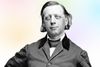
Henry Ward Beecher
Henry Ward Beecher
See All Quotes
Advertisement
Advertisement

In the 1970s, Belgian fashion designer Diane von Fürstenberg became a household name when she introduced the world to her iconic wrap dress. Her timeless designs have endured for more than 50 years, and have been worn by everyone from Paris Hilton and Sarah Jessica Parker to Michelle Obama and Kate Middleton. In her 2015 biography "The Woman I Wanted to Be,” the fiercely ambitious designer explained her unique viewpoint on beauty. “Personality, not traditional beauty, is always what I’ve looked for in my models,” she wrote. This philosophy is a reminder that very few people will ever walk a fashion runway, but we can all walk through the world with a beauty that is uniquely our own. 

Diane von Fürstenberg
See All Quotes
Advertisement
Advertisement
Motivation

We must believe that we are gifted for something.

Marie Curie

Polish physicist Marie Curie made history as the first woman to win a Nobel Prize in 1903 and then again as the only woman to ever win a second Nobel in 1911 (first in physics, then in chemistry). She earned these honors for her groundbreaking work in discovering two new elements: radium and polonium. Though she received much acclaim for her research, Curie also suffered many hardships in her life, including the death of her beloved husband and research partner, Pierre Curie, as well as long-term physical ailments from her work with radioactive materials. Through it all, Curie remained hopeful and optimistic. In her 1937 biography she wrote, “Life is not easy for any of us. But what of that? We must have perseverance and above all confidence in ourselves. We must believe that we are gifted for something, and that this thing, at whatever cost, must be attained.”

Marie Curie
Marie Curie
Nobel Prize-winning Polish scientist (1867-1934)
See All Quotes
Advertisement
Advertisement
Motivation

Most great people have attained their greatest success just one step beyond their greatest failure.

Napoleon Hill

Napoleon Hill’s greatest success, his motivational book “Think and Grow Rich,” is often cited as the publication that ignited the self-help industry. Though the details of Hill’s career are often debated, the undisputed reality was that he persisted with his writing through the ups and downs of a career that spanned the Great Depression and World War II. In his 87 years, he wrote 11 books, many of which have been translated and republished countless times. In his books, his words live on to remind us that failure is only the end of the story if we give up, and great success lies in persevering beyond even the most discouraging setbacks.  

Napoleon Hill
Napoleon Hill
Self-help author (1883-1970)
See All Quotes
Advertisement
Advertisement

In 2010, researcher and speaker Brené Brown gave a now-famous TED Talk called “The Power of Vulnerability.” In it, she shares what she discovered during her decade of research about human connection and happiness. This quote from her talk gets to the heart of her insight, which has resonated with millions of viewers. Vulnerability is not a weakness, Brown reminds us. In fact, embracing it is what makes it possible to have successful relationships with others, to experience true joy, and to become the best versions of ourselves.

Brené Brown
Brené Brown
Researcher and storyteller (1965-present)
See All Quotes
Advertisement
Advertisement
Motivation

I learned that courage was not the absence of fear, but the triumph over it.

Nelson Mandela

South African leader Nelson Mandela spent half a century fighting against the oppressive system of apartheid that segregated Black and white South Africans — a fight that led to his arrest in 1962 and a 27-year imprisonment. After his release from prison in 1990, Mandela spent the next four years participating in peace talks and negotiations to bring apartheid to an end, and in 1994 was elected as the first Black president of a revolutionized nation. Mandela never faltered in his belief in a more equal and just future for South Africa, and that belief propelled him to act despite the risk. With this quote, from his 1994 memoir “Long Walk to Freedom,” he points out that courage and fear aren’t opposites; rather, true courage is taking action even when you’re scared. “The brave man,” Mandela wrote, “is not he who does not feel afraid, but he who conquers that fear.” 

Nelson Mandela
Nelson Mandela
Former president of South Africa (1918-2013)
See All Quotes
Advertisement
Advertisement
Motivation

Your time is limited, so don’t waste it living someone else’s life.

Steve Jobs

In June 2005, Apple co-founder Steve Jobs gave the commencement speech at Stanford University. As he spoke about his own remarkable success, he also contemplated mortality, even saying death was possibly the “single best invention of life” because of the change it enables. He urged the graduating students to make the most of the finite time they have. He encouraged them to follow their own instincts and passions, and to discover, then live for, what is truly important. Jobs practiced what he preached: He said he had spent most of his life treating each day as if it could be his last. 

Steve Jobs
Steve Jobs
Entrepreneur and Apple co-founder (1955-2011)
See All Quotes
Advertisement
Advertisement
Motivation

To invent your own life's meaning is not easy, but it's still allowed.

Bill Watterson

In 1990, cartoonist Bill Watterson gave an insightful, philosophy-laden address to graduates at Kenyon College. He insisted that despite the pressures of social convention, we are allowed to create our own purpose, and that by reading and studying, we gain the “Swiss Army knife of mental tools” to ask truthful and meaningful questions about life. That Watterson gave such a profound speech came as no surprise to fans of his comic strip, “Calvin and Hobbes.” The comic follows the adventures of 6-year-old Calvin and his stuffed tiger, Hobbes, whom everyone apart from Calvin sees as an inanimate toy. It often addresses philosophical questions while commenting on the nature of art, academia, and reality. His two central characters are, after all, named after the 16th-century theologian John Calvin and the 17th-century philosopher Thomas Hobbes. 

Bill Watterson
Bill Watterson
Cartoonist and “Calvin and Hobbes” creator (1958-present)
See All Quotes
Advertisement
Advertisement
Love

Where there is love and inspiration, I don’t think you can go wrong.

Ella Fitzgerald

A quarter century after her death, the timeless legacy of Ella Fitzgerald, the “First Lady of Song," endures. She triumphed over cultural roadblocks and personal struggles, and paved the way for other Black performers of the 20th century. Fitzgerald was born in racially segregated Virginia in 1917 and had a tumultuous youth. After an amateur audition at Harlem’s Apollo Theatre in 1934, Fitzgerald found a true home on the stage. She said, "I felt the acceptance and love from my audience. I knew I wanted to sing before people the rest of my life." Fitzgerald went on to build a successful solo career, while also teaming up with greats like Louis Armstrong, Dizzy Gillespie, and Count Basie. Her passion for music, her beautiful and unique jazz singing style, and her ability to connect with the audience led her to win 13 Grammys, including the first awarded to a Black woman. Her wise words, illustrious career, and soulful voice remind us of the power of doing what we love.

Ella Fitzgerald
Ella Fitzgerald
See All Quotes
Advertisement
Advertisement

Dinah Maria Mulock Craik was one of the most successful women poets and novelists of the 19th century. She published her first work, “The Ogilvies,” in 1849 to critical acclaim, and soon garnered comparison to such influential writers as George Eliot. “The Ogilvies,” in which this quote appears, follows the romantic entanglements and subsequent marriages of three cousins (a popular 19th-century literary convention, as Jane Austen proved decades earlier). Craik’s words offer a timeless truism about love’s cyclical nature — that the care and compassion we give others, we’ll receive in kind. 

Dinah Craik
Dinah Craik
See All Quotes
Advertisement
Advertisement