
Love

Being good to people is a wonderful legacy to leave behind.

Taylor Swift

Taylor Swift is famous for treating her fans like friends. Years ago, when the superstar was just starting out, she would invite concertgoers backstage for “T Parties,” where they would meet her family and hang out. She has also been known to visit Swifties in the hospital, attend wedding showers, and even include them in her music videos. Though her fan base now numbers in the millions, she still engages frequently on social media and continues her post-show meet-and-greets. The genuine kindness she shows her fans proves just how high a premium she puts on being good to others.

Taylor Swift
Taylor Swift
Singer-songwriter (1989-present)
See All Quotes
Advertisement
Advertisement
One of the greatest tennis players of all time, as well as an advocate for women’s and LGBTQ+ rights, Billie Jean King is no stranger to the champion mentality, both on and off the court. This quote speaks to her characteristic tenacity, courage, and dedication, which led her to 39 Grand Slam titles, a record 20 Wimbledon titles, a spot in the International Tennis Hall of Fame, and a career that broke barriers for generations of women athletes.
Billie Jean King
Billie Jean King
See All Quotes
Advertisement
Advertisement
Even for one of the most influential scientific geniuses in history, knowledge was not the ultimate end goal. In Albert Einstein’s 1931 collection of essays titled “Cosmic Religion: With Other Opinions and Aphorisms,” he argued that the apparent dualities of science and religion, knowledge and imagination, and logic and wonder are in fact compatible, and together they enrich the human experience. Einstein spoke frequently about imagination, which he believed was a crucial component of scientific progress. "Logic will get you from A to B," he said. "Imagination will take you everywhere." The famed physicist reminds us that it is imagination that gives wings to knowledge, by pointing the way to new possibilities.


Albert Einstein
Albert Einstein
Nobel Prize-winning physicist (1879-1955)
See All Quotes
Advertisement
Advertisement
Hope

There is no gate, no lock, no bolt that you can set upon the freedom of my mind.

Virginia Woolf

Virginia Woolf’s extended essay “A Room of One’s Own” is one of the seminal texts of feminist literature. The essay explored a range of themes, from gender inequality and the subjectivity of truth, to the nature of creativity and the need for financial independence. The essay’s title derives from this latter point, asserting that “a woman must have money and a room of her own if she is to write fiction.” Woolf praised Jane Austen and Emily Brontë, who each had the strength and freedom of mind to ignore the pressures of criticism in a patriarchal society, and produced truly authentic literature. These two authors, Woolf explained, were unshrinking in their genius and integrity. “They wrote as women write, not as men write,” Woolf observed — which, especially in their time, was a brave act of creative defiance. 

Virginia Woolf
Virginia Woolf
English writer (1882-1941)
See All Quotes
Advertisement
Advertisement
Motivation

I will either find a way, or make one.

Hannibal

In 218 BCE, during the Second Punic War, the great Carthaginian general Hannibal led his army from modern-day Spain all the way to Italy and toward Rome, in one of the most famous military achievements in history. As the troops neared the daunting peaks of the Alps, Hannibal’s generals warned him they would not be able to cross the mountain range with the horses and elephants they brought with them. Refusing to be deterred, Hannibal responded with the quote above: “Aut inveniam viam aut faciam.” He and his troops forged their own path across the mountains, and continued their march through Italy.
Hannibal
Hannibal
See All Quotes
Advertisement
Advertisement
Wisdom

The older I get, the greater power I seem to have to help the world.

Susan B. Anthony

Susan B. Anthony spent most of her later life, in the 1890s, as president of the National Woman Suffrage Association. After enduring a lifetime of sexist ridicule for her activism, post-presidency — in her late 70s and into her 80s — she attended speaking engagements in Europe, where she was embraced as an American hero. Although Anthony did not live to see women earn the right to vote in 1920, in her later years she witnessed the public deferring to her wisdom. Age brings experience, and the shared respect for that experience — as well as the work done on your past self — has the power to make a great impact on society.

Susan B. Anthony
Susan B. Anthony
See All Quotes
Advertisement
Advertisement

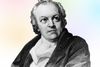
William Blake had a theory of contraries, something reflected in the titles of his two most famous works: “Songs of Innocence and of Experience” and “The Marriage of Heaven and Hell.” In the latter, written between 1790 and 1793, Blake argues that “attraction and repulsion, reason and energy, love and hate, are necessary to human existence.” In the same piece, Blake states that “exuberance is beauty.” We can see this exuberance in Blake’s visionary works, in the colorful style and deeply layered meanings of his poetry and prose, and in the paintings that often accompany them. Many of Blake’s contemporaries believed him to be mad due to his idiosyncratic and often iconoclastic views, but he is now considered one of the greatest and most creative British artists of all time. 

William Blake
William Blake
English poet and painter (1757-1827)
See All Quotes
Advertisement
Advertisement
Motivation

The world belongs to the enthusiast who keeps cool.

William McFee

William McFee was a 20th-century British writer known for his novels set at sea, an apt choice considering McFee himself was born on his father’s ship and later worked as a ship engineer. McFee served in the British Navy during World War I, publishing several novels and nonfiction works from his various postings. After 20 years at sea, he turned to a full-time career as a writer. Journalist Christopher Morley once praised the engineer’s touch he saw in McFee’s writing, calling him “patient, dogged, [and] purposeful.” McFee’s words here remind us to balance our passions with a level head: Marrying drive with patience and diligence remains the best way to move toward our goals.
William McFee
William McFee
See All Quotes
Advertisement
Advertisement
Love

Always be a first-rate version of yourself, instead of a second-rate version of somebody else.

Judy Garland

Onstage and on-screen, Judy Garland was splendid at channeling characters, especially through song. Yet in private moments — which, for the lifelong star, were few and far between — she prided herself on her authenticity. The Oscar nominee and Grammy winner found that highlighting her favorite parts of her personality — from her sense of humor and strong convictions to her encyclopedic entertainment knowledge — drove others to embrace her even more. Long before her daughters Liza Minnelli and Lorna Luft became performers, Garland taught them that people who are true to themselves leave the strongest imprints on the world.

Judy Garland
Judy Garland
Actress, singer, and dancer (1922-1969)
See All Quotes
Advertisement
Advertisement
Wisdom

The curious paradox is that when I accept myself just as I am, then I can change.

Carl Rogers

American psychologist Carl Rogers, one of the founding fathers of psychotherapy research, presents this “curious paradox” in his 1961 book “On Becoming a Person: A Therapist’s View of Psychotherapy.” Rogers encourages us to stop focusing our energy on trying to improve ourselves and simply learn to accept who we are, flaws and all. Ironically, it’s often that very acceptance that creates space for personal growth and change.
Carl Rogers
Carl Rogers
Psychologist (1902-1987)
See All Quotes
Advertisement
Advertisement