
Motivation

To lead people, walk behind them.

Laozi

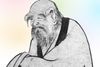
This thought, presented by the ancient Chinese philosopher Laozi, is counterintuitive to most people’s perceptions of leadership. Laozi believed that to be the kind of leader people want to follow, you have to have a solid understanding of who you are leading, and that knowledge is best obtained from a position of service rather than of command. This quote suggests that by putting the needs of those under your care above your own, you can better serve them — and if you know how to serve them better, you will become a better leader.
Laozi
Laozi
Chinese philosopher of Taoism (571 BCE-?)
See All Quotes
Advertisement
Advertisement
Motivation

The worst enemy to creativity is self doubt.

Sylvia Plath

It’s no wonder Sylvia Plath became a poet; she’d been keeping daily diaries and journals since she was a child. This particular quote comes from the journals Plath kept during her time at Smith College in Northampton, Massachusetts. She was grappling with the decision of going to summer school at Harvard for a writing course she wished to take, or heading home for the season. Ultimately she decided to go home, noting, “Everything in life is writable about if you have the outgoing guts to do it, and the imagination to improvise.” Not going to Harvard wouldn’t hurt her creativity, she figured, as long as she didn’t doubt her own abilities.

Sylvia Plath
Sylvia Plath
Poet and novelist (1932-1963)
See All Quotes
Advertisement
Advertisement
Love

If your compassion does not include yourself, it is incomplete.

Jack Kornfield

Buddhist practitioner and author Jack Kornfield included this quote in his 1994 book, “Buddha’s Little Instruction Book” — and it was thereafter commonly misattributed to Gautama Buddha himself. One of the tenets of Buddhism is extending compassion to other people, but we also must remember to be compassionate with ourselves. It can be a very different thing to go easy on yourself when something goes wrong. Yet we can’t fully practice compassion until we turn it inward first.


Jack Kornfield
Jack Kornfield
Buddhist teacher (1945-present)
See All Quotes
Advertisement
Advertisement
Wisdom

The mind is like a car battery — it recharges by running.

Bill Watterson

Every day, for 10 years, cartoonist Bill Watterson delighted readers with a new story in his beloved syndicated comic strip "Calvin and Hobbes." But that kind of round-the-clock ingenuity is no easy feat. His secret? Recharging the mind by letting it play. “I’ve had to cultivate a kind of mental playfulness,” Watterson said in the same 1990 commencement speech at Kenyon College where he gave the quote above. “A playful mind is inquisitive, and learning is fun.” In other words, creative ideas come when the mind is encouraged to wander into new areas, exploring wherever your natural curiosity may lead. Instead of “shutting off” your brain at the end of a long day, reinvigorate it by indulging your innate sense of wonder. If you follow what makes learning fun, it’s bound to lead you to new ideas.

Bill Watterson
Bill Watterson
Cartoonist and “Calvin and Hobbes” creator (1958-present)
See All Quotes
Advertisement
Advertisement
Hope

We often take for granted the very things that most deserve our gratitude.

Cynthia Ozick

Sometimes we find ourselves feeling so comfortable that we take the most basic aspects of life for granted. Novelist and essayist Cynthia Ozick tackled this feeling in her 1984 essay, "The Riddle of the Ordinary." In it, she pointed out the paradoxical way we experience extraordinary versus ordinary things: "The Extraordinary does not let you walk away and shrug your shoulders. But the Ordinary is a much harder case," she wrote. "In the first place, by making itself so noticeable — it is around us all the time — the Ordinary has got itself in bad fix with us: we hardly ever notice it." Ozick’s observation reminds us to treat everything — including the ordinary things — with gratitude.

Cynthia Ozick
Cynthia Ozick
See All Quotes
Advertisement
Advertisement

The second half of this quote originally appeared as a line in Allen Ginsberg’s poem “On Burroughs’ Work.” Years later, in an interview with “Writer’s Digest,” when Ginsberg was asked to share some advice for aspiring writers, he borrowed from his own material, adding the line about following your inner moonlight. It’s a concept that Ginsberg, who was known for disrupting the status quo with his eccentric ways, both preached and practiced.  

Allen Ginsberg
Allen Ginsberg
Beat poet and writer (1926-1997)
See All Quotes
Advertisement
Advertisement
Love

A true friend is one soul in two bodies.

Aristotle

The ancient Greek philosopher Aristotle was a big fan of friendship. “Without friends no one would choose to live,” he wrote, “though he had all other goods.” The great thinker believed that our closest friends serve as a source of guidance and inspiration, to help us become the best versions of ourselves. A true friend, as he saw it, is someone who shares the same fundamental values, attitudes, and outlook on life — a kindred spirit. The quote above has also been translated as “a single soul dwelling in two bodies,” a striking description of the kind of bond two people can share. It's remarkable that some 2,000 years after Aristotle lived, his observation is still keenly felt when we find that rare and deep connection with another person.

Aristotle
Aristotle
Ancient Greek philosopher (384-322 BCE)
See All Quotes
Advertisement
Advertisement
Motivation

I believe great people do things before they are ready.

Amy Poehler

With these words from her 2014 memoir “Yes Please,” comedian and Emmy Award-winning actress Amy Poehler encourages us to take on challenges, even when they feel daunting. Poehler — who co-founded the influential Upright Citizens Brigade before moving on to “Saturday Night Live” and later starring in NBC’s beloved sitcom “Parks and Recreation” — is certainly qualified to give advice about ambition. She goes on to suggest that “doing what you're afraid of, getting out of your comfort zone, taking risks like that — that's what life is.”

Amy Poehler
Amy Poehler
See All Quotes
Advertisement
Advertisement
Motivation

If you hear a voice within you saying, “You are not a painter,” then by all means paint, boy, and that voice will be silenced.

Vincent van Gogh

At the age of 16, in 1869, Vincent van Gogh left his home in the Netherlands to work with his uncle, an art dealer who was traveling between London and Paris. The work gave him access to some of the greatest artists of his time, but Van Gogh himself didn’t begin creating art until 1880, just 10 years before his death. In that time he created over 800 paintings and 700 drawings, establishing a unique style that would, posthumously, make him a household name. Though he only sold one piece of work in his life, he is widely considered one of the greatest painters of the 19th century. 

Vincent van Gogh
Vincent van Gogh
Dutch postimpressionist painter (1853-1890)
See All Quotes
Advertisement
Advertisement
Wisdom

Humility is not thinking less of yourself; it is thinking of yourself less.

Rick Warren

This quote is from pastor and author Rick Warren’s 2002 book “The Purpose Driven Life.” Variations of the quote, however, have appeared in many other sources — and no wonder, as it’s a resonant message. There’s a misperception that to be humble means you shouldn’t regard yourself highly. But to practice true humility requires a shift in perspective, to put others first.

Rick Warren
Rick Warren
See All Quotes
Advertisement
Advertisement