Motivation

You have to have confidence in your vision or else no one else will trust in it.

Mary Katrantzou

For Greek fashion designer Mary Katrantzou — whose unique take on textures, prints, and silhouettes in women’s clothing earned her international acclaim at a young age — confidence is the key to success. In an interview with “The Talks” in 2015, she admitted that doubts are natural for any artist. “In fashion you have to put a new product out there every six months with little time to process, little time to evolve, and all the ambition in the world,” she reflected. “It’s impossible, I think, not to doubt.” Yet Katrantzou also pointed out that we must believe in our own vision in order to create. It’s a truism even beyond the artistic world: When we move through life with confidence, we teach others to trust in us, too.

Mary Katrantzou
Mary Katrantzou
See All Quotes
Advertisement
Advertisement

Rania Al-Abdullah, the wife of King Abdullah II, has served as the queen of Jordan for more than 20 years, and in that time she has been a champion for her people as well as several humanitarian causes around the world. In her efforts to promote global education, the rights of women and children, community empowerment, and cultural understanding, she reminds us that we are always better together. When we can engage in respectful dialogue, free to share our thoughts, feelings, and stories, everyone benefits.

Rania Al-Abdullah
Rania Al-Abdullah
See All Quotes
Advertisement
Advertisement
Love

When you know and respect your own Inner Nature, you know where you belong.

Benjamin Hoff

Author Benjamin Hoff is best known for his 1982 book “The Tao of Pooh,” an exploration of the Chinese philosophy of Taoism using the characters of A.A. Milne’s beloved children’s series “Winnie-the-Pooh.” In Hoff’s book, Pooh represents the Taoist concept of “P’u,” humanity’s natural and spontaneous state. The book also covers more general concepts, including finding contentment in everyday life and the ways in which nature can influence our well-being. When contemplating our next step, Hoff suggests looking inward: Our intuition is our best compass.

Benjamin Hoff
Benjamin Hoff
See All Quotes
Advertisement
Advertisement
Hope

You either walk inside your story and own it or you stand outside your story and hustle for your worthiness.

Brené Brown

Lecturer and author Brené Brown’s research on shame and vulnerability has contributed to the public conversation about what it means to live authentically — or, as Brown calls it, “wholehearted living.” In her book “Rising Strong,” Brown acknowledges that owning up to our difficult emotions (including fear, anger, aggression, and shame) can be difficult, and can even feel dangerous. But taking accountability for our emotions and actions, no matter how messy, is how we learn and grow from our mistakes. By walking inside our stories, instead of denying our feelings and distancing ourselves from the truth, we can transform our lives.

Brené Brown
Brené Brown
Researcher and storyteller (1965-present)
See All Quotes
Advertisement
Advertisement

After spending two decades at L’Uomo Vogue — the menswear counterpart to Vogue Italia — Robert Rabensteiner is now the fashion editor-at-large for Condé Nast’s Italian division. Part of his job is appraising runway collections in New York, Paris, London, and Milan, his primary residence. Yet some of his most cherished trips, to a remote chalet near his hometown in the Austrian Alps, are far less elaborate. Hidden deep in the forest, the chalet is only accessible by riding a chairlift, then taking a half-hour trek. When his mother died, Rabensteiner sought refuge in the house and, more so, its calm setting. With this quote, he speaks to a feeling shared by so many of us: that the connection to nature offers an unparalleled source of wonder, healing, and joy. 

Robert Rabensteiner
Robert Rabensteiner
See All Quotes
Advertisement
Advertisement

President Franklin D. Roosevelt led the United States through some of the most tumultuous periods in the nation’s history, including the Great Depression and the Second World War. He was also the first known President to have a significant physical disability. Despite those challenges, he implemented some of the most lasting labor reforms in U.S. history and helped ensure the Allied forces’ victory over the Nazis. His bracing wisdom continues to echo down the ages: We can take our doubts into account when making decisions, but we shouldn’t let them hold us back from moving toward our goals.
Franklin D. Roosevelt
32nd U.S. president (1882-1945)
See All Quotes
Advertisement
Advertisement

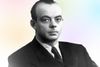
This poignant sentiment appeared in Antoine de Saint-Exupéry’s award-winning, posthumous novel “The Wisdom of the Sands.” In July 1944, the French writer and aviator took off in his plane, never to be seen again. Pieces of the plane were finally discovered in the early 2000s, off the coast of Marseille, France. The world mourned the imaginative spirit behind “The Little Prince,” Saint-Exupéry’s 1943 fable featuring a wayward pilot as its narrator, which has sold 200 million copies. Saint-Exupéry did not believe in passively accepting one’s lot in life. Once he determined his goals, he took measurable steps to make them a reality.

Antoine de Saint-Exupéry
French writer and aviator (1900-1944)
See All Quotes
Advertisement
Advertisement
Wisdom

Ultimately, art is trying to see things that other people don't see.

Trevor Paglen

For most of his artistic career, artist and geographer Trevor Paglen has focused on the American surveillance state — what it means to see and be seen. His pieces include a temporary satellite (“Orbital Reflector,” 2018) and long-distance photos of military bases and stealth drones. Paglen’s work pushes boundaries — not only of what can be considered art, but also of our own capacity to truly see our surroundings. Here, he reminds us that art can open up our senses in new ways, deepening our understanding of the world and our place in it.

Trevor Paglen
Trevor Paglen
See All Quotes
Advertisement
Advertisement
Motivation

I learned that the moment you want to slow down is the moment you should accelerate.

James Dyson

James Dyson could have been forgiven for slowing down when he was struggling to perfect his innovative Dual Cyclone vacuum cleaner. He made 5,127 prototypes before he got it right, but with every step he became even more determined. “There were 5,126 failures,” he said, “but I learned from each one. That’s how I came up with a solution.” It took Dyson 15 years of tinkering before his first vacuum cleaner was ready for launch, but no major manufacturer or distributor was willing to back the product. Undeterred, he set up his own manufacturing company, and soon his Dual Cyclone became the fastest-selling vacuum cleaner ever made in Britain. Today, Dyson is one of the wealthiest people in the U.K., with an estimated net worth of around $29 billion.

James Dyson
James Dyson
See All Quotes
Advertisement
Advertisement

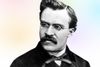
The meaning of life has long been a preoccupation of many great philosophers, and Friedrich Nietzsche was no exception. Often mistaken for a nihilist, Nietzsche was in fact looking for a way to counter nihilism. When he famously wrote, “God is dead,” it was not simply because Nietzsche was an atheist. Rather, he was concerned that in an increasingly secular and scientific society, people could no longer turn to Christianity to find meaning. Finding purpose in life was therefore hugely important to countering nihilism. Nietzsche believed that finding the “Why?” in life gives meaning, allowing us to more easily cope with existence. The road to discovery can be long and lonely, but it is vital nonetheless. As he wrote in “Schopenhauer as Educator,” “There is one path in the world that none can walk but you. Where does it lead? Don’t ask, walk!” 

Friedrich Nietzsche
Friedrich Nietzsche
German philosopher and cultural critic (1844–1900)
See All Quotes
Advertisement
Advertisement