
Custom post type for quotes
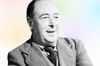
This insight appears in C.S. Lewis’ 1958 book “Reflections on the Psalms”in the chapter titled “Connivance,” wherein he reflects on moral compromise and the subtle ways in which ideas can take root in our conscience. In this passage, Lewis explores how people may outwardly resist an argument yet continue to think about it further and still be affected by its influence long after the conversation ends. As a former atheist who became one of Christianity’s most influential modern voices, Lewis understood the long, slow process of internal transformation. He cautions readers not to mistake immediate rejection or rebuttal for failure, because hearts and minds can be changed over time, often quietly and without any formal acknowledgment. In everyday life, Lewis’ quote is a reminder that we should always speak with patience and integrity, trusting the power of words to leave a lasting and potentially life-changing impression, even if they’re dismissed in the moment.
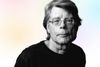
Before his first book sold in 1973, Stephen King had to face down fear as he began each new short story and novel. Starting something new — be it a creative project, a relationship, or a major life change — can bring up many questions and doubts. But King reminds us that new beginnings offer something else: possibility. Having published over 60 bestselling novels to date, he embodies the payoff in just starting. After all, as King says, “After that, things can only get better.”
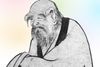
The ancient Chinese philosopher Laozi is credited with founding Taoism, a spiritual tradition that prioritizes harmony with nature, a life of humility and simplicity, and making peace with allowing things to happen as they may. This quote — suggesting that good leadership is not about control, but rather quiet, unassuming stewardship — comes from his work “Tao Te Ching,” a foundational Taoist text dated sometime between the third and sixth centuries BCE. Laozi believed the best leaders empower others to act and thrive on their own terms while barely drawing attention to themselves at all. This stands in sharp contrast to the spectacle many historical leaders have made of themselves, but according to Laozi, the strongest influence doesn’t come from being loud; it comes from remaining steady, selfless, and aware of the bigger picture.
Poet Amanda Gorman took the world by storm when she read her powerful poem “The Hill We Climb,” from which these lines are taken, at the inauguration of U.S. President Joe Biden. Gorman began drafting the poem on January 6, 2021, the day extremists stormed the U.S. Capitol. The event was the culmination of years of increasing political discord, exacerbated in part by the Covid-19 pandemic, which was then approximately one year old. Gorman’s message of unity was welcome. She rose to instant stardom for her poise, her words, her message, her mustard-colored coat and ruby headband. But most meaningful was how her poem balanced two ostensibly incompatible perspectives: an unflinching critique of America’s complicated and sometimes shameful history, and an optimistic celebration, rich with hope for the brighter, kinder, more equitable society we must become.
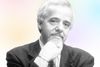
Legendary jazz pianist Thelonious Monk relayed this message, along with other words of wisdom, to saxophonist Steve Lacy when the two played together in 1960. While his list of guidelines, which Lacy transcribed in a notebook titled "T. Monk’s Advice," was initially directed at fellow musicians, messages like these offer universal insight. Monk advocates for authenticity, personal integrity, and belief in oneself as our highest, most defining virtues. A singular force in music and beyond, he led by example on this front. In a world of constant pressure to give into conventions and expectations, he stressed that the greatest gift we have to give is ourselves.