
Custom post type for quotes
J.M. Barrie was a prolific novelist and playwright, best known for creating the iconic character of Peter Pan. Pan first appeared in Barrie’s 1902 novel “The Little White Bird,” wherein Barrie posed the question, “Shall we make a new rule of life from tonight: always to try to be a little kinder than is necessary?” The original Peter, however, was very different from the free-spirited, cocksure, and eternally young boy we know and love today. Originally, Peter was a 7-day-old flying baby — and therefore quite incapable of sword fighting with hook-handed pirates. Barrie later made Pan the central character in his stage play “Peter Pan, or The Boy Who Wouldn't Grow Up,” which premiered in 1904. The play was a success and was later adapted into the 1911 novel “Peter and Wendy,” in which Barrie further expanded on Peter’s adventures in Neverland with its mermaids, fairies, and pirates.
William Faulkner was a titan of American literature, but his path to literary success wasn’t the smoothest — he had to lose sight of the shore before he found his way. With the outbreak of World War I, he tried to join the U.S. Army but was rejected for being too short, so he joined the Canadian RAF. He then enrolled at the University of Mississippi, but his efforts resulted in a “D” grade in English. He worked odd jobs and had a handful of poems published, but it was his move to bohemian New Orleans that set him on a new course, shifting from poetry to prose. His first three novels were only moderately successful and left him at odds with his publishers. So, in 1928, he began writing “The Sound and the Fury,” using a more experimental style. The novel wasn’t immediately successful, but Faulkner had very much found his new horizon.
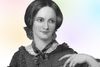
The friendship between writer Charlotte Brontë and publisher W.S. Williams began with false pretenses and a rejection letter. During their early correspondence, Brontë posed as a man named Currer Bell. Six publishing houses, including Williams' firm, Smith, Elder & Co., declined to print Bell's first novel, “The Professor.” However, Brontë reflected that Williams gave her much-needed “encouragement to persevere as an author,” and in October 1847, the firm published her pseudonymous masterpiece “Jane Eyre.” Several months later, Brontë revealed her true identity to Williams. Instead of being scandalized, he invited her to meet his wife and children, and began sending her books. Brontë received one of these packages in March 1850, when she was living alone with her father after having lost her mother and three siblings. While acknowledging the gift, she included this quote in her reply to Williams, reflecting that joy is always more palpable when loved ones can join in it.
Speaker and author Byron Katie regularly encourages us to look inside and ask ourselves the hard questions. She refers to it as “The Work,” a process that helps us to confront stressful thoughts and feelings and eliminate them from our lives. With anger, in particular, whether it’s directed at ourselves or someone else, we’re held captive by those negative emotions. Until we forgive whatever caused the hurt, we’ll never be free from that negativity. So forgiveness actually becomes a form of self-care, allowing us to move forward unencumbered, to enjoy the freedom and lightness that comes from letting go.
William James, often called the “father of American psychology,” was not only a pioneering psychologist but also an eminent physiologist and philosopher, who happened to come from a family of notable figures. (His brother was the acclaimed novelist Henry James, and his sister, the diarist Alice James.) His wide-ranging fields of investigation gave us ideas such as “the stream of thought” and the concept of a baby’s impression of the world being “one great blooming, buzzing confusion.” Later in life, James helped establish the philosophical school known as pragmatism, in which, broadly speaking, an ideology is true if it works satisfactorily, but should be rejected if it’s impractical. This quote comes from an 1895 speech at Harvard University, in which James told students, “Be not afraid of life.” The very idea that life is worth living, he suggested, will lead to a worthy existence.

Clarice Lispector was a Brazilian writer of Jewish descent who wrote about the complexities of life and the human experience. Her works, which include novels, short stories, and nonfiction essays, explore themes such as identity, gender roles, love, and death. She is considered one of the most important writers in Brazil’s literary history. This quote is from her novel “The Hour of the Star,” published in 1977, shortly before Lispector’s death. Lispector’s work has been translated into more than 20 languages, and her influence continues to be felt around the world.

This quote from Brené Brown’s book “The Gifts of Imperfection” encourages us to examine our relationship with giving and receiving, and to strive for greater openness, compassion, and generosity in both aspects. Brown believes deeply in the importance of genuine connection, and teaches that for true connection to occur, energy must travel in both directions between people. If we have barriers or blocks to receiving — maybe due to fear of vulnerability, or a desire to maintain control — then our ability to give authentically and generously may also be limited. This quote invites us to consider how our capacity to give is intimately connected to our willingness to receive.

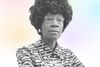
Shirley Chisholm, the first Black U.S. congresswoman and first Black candidate to make a bid for a major party presidential nomination, invited herself to many tables of power. A teacher by training, she represented New York state in the House of Representatives from 1968 to 1983. While she did not win the Democratic presidential nomination in 1972, she ran a spirited campaign with the slogan, “Unbought and Unbossed.” She was also a founding member of the Congressional Black Caucus and active in the NAACP. Throughout her life, Chisholm fought for the rights of women and people of color. She did not wait for permission to stand up for her community, and encouraged others who were underrepresented to take their own rightful place in government.