Wisdom

Your world is a living expression of how you are using and have used your mind.

Earl Nightingale
From a young boy living in a tent city in Long Beach, California, to an internationally syndicated radio personality, award-winning spoken word recording artist, and owner of a multimillion-dollar electronic publishing company, Earl Nightingale was the human embodiment of a “rags-to-riches” success story. Nightingale’s ascent to success began after he read a line from Napoleon Hill’s 1937 book “Think and Grow Rich”: “We become what we think about.” Nightingale realized this correlation between our cognitive behaviors and the world around us was also highlighted in multiple religions and philosophies, and it quickly became the linchpin of his motivational speeches. Nightingale believed anyone could be successful if they put their mind to it, and that this success could then be shared and multiplied with others. His ideology was well received: Nightingale’s spoken word records sold millions of copies, and his radio program, “Our Changing World,” was syndicated in more than 25 countries. 

Earl Nightingale
Earl Nightingale
Motivational speaker and author (1921-1989)
See All Quotes
Advertisement
Advertisement
Motivation

That’s the great secret of creativity. You treat ideas like cats: you make them follow you.

Ray Bradbury

Ray Bradbury is more than qualified to speak on the secrets of creativity. One of the most celebrated American authors of the 20th century, he moved from one genre to another with ease, trying his hand at science fiction, fantasy, horror, mystery, and even fictionalized memoir. He published more than 30 books and nearly 600 short stories, but he’s best remembered for his 1953 novel “Fahrenheit 451,” widely regarded as one of the greatest dystopian novels ever written. The quote above comes from “Zen in the Art of Writing,” a collection of Bradbury’s essays that all share a common theme: the author’s deep love and respect for writing and the creative process. 

Ray Bradbury
Ray Bradbury
Author (1920-2012)
See All Quotes
Advertisement
Advertisement
Happiness

What is happiness except the simple harmony between a man and the life he leads?

Albert Camus

In French philosopher Albert Camus’ lyrical essay “The Desert,” written in 1938, he discusses what makes people happy. He advocates for living in the now — "to count on nothing and to see the present as the only truth given to us." When we stop fighting against the past or striving for the future, we can accept where we are, and what we’re doing in life at this very moment. That simple harmony can bring about peace and happiness.

Albert Camus
Albert Camus
French philosopher and author (1913-1960)
See All Quotes
Advertisement
Advertisement

Author Benjamin Alire Sáenz wrote this line in his young adult novel “Aristotle and Dante Discover the Secrets of the Universe.” The book’s protagonist is 15-year-old Aristotle “Ari” Mendoza, a quiet and lonely boy whose father comes home from the Vietnam War a changed man. At first, Ari is angry at his father’s uncommunicative and withdrawn manner, but as he matures, he is able to see it from a new perspective. Ari reflects, “And loved my father too, for the careful way he spoke. I came to understand that my father was a careful man.” Ari sees there is beauty in understanding the power our words can have.

Benjamin Alire Sáenz
See All Quotes
Advertisement
Advertisement
Motivation

We all have ability. The difference is how we use it.

Stevie Wonder

Though he was born with a disorder that led to blindness, musician Stevie Wonder was so gifted and passionate about music that by the age of 10, he had already taught himself multiple instruments. At age 11, he was discovered by a Motown music executive and signed to a record deal. Still, Wonder never rested on his laurels, choosing instead to push himself. He studied classical piano, sought out mentors, and promoted social issues through music (including recording the 1985 charity single “We Are the World”). This quote reminds us that everyone can have an impact, no matter our circumstances — but it’s up to us to harness our unique skills.

Stevie Wonder
Stevie Wonder
See All Quotes
Advertisement
Advertisement
Wisdom

What you resist not only persists, but will grow in size.

Carl Jung

Carl Gustav Jung was a Swiss psychologist, psychiatrist, and contemporary of Sigmund Freud. Jung is perhaps most lauded for his research into mind functions and personality types, including his introduction of the terms “introversion” and “extraversion.” The above quote on mental and emotional resistance is more often heard today in its abbreviated form, “What you resist, persists.” The idea is that by investing energy into avoiding, resenting, or denying our feelings and experiences, we give those hindrances power over us and prevent ourselves from moving forward. Jung’s quote suggests a counterintuitive notion: Allowing ourselves to accept and work through those difficult feelings makes it easier for us to process, heal, and learn from them. 

Carl Jung
Carl Jung
Swiss psychologist (1875-1961)
See All Quotes
Advertisement
Advertisement
Love

My only consolation when I am really sad is to love and to be loved.

Marcel Proust

With his monumental seven-volume novel “In Search of Lost Time,” published between 1913 and 1927, Marcel Proust became one of the most influential authors of the 20th century, shaping the trajectory of modern literature. His writing, with themes of memory, love, and the nature of art itself, has acquired a reputation for verbosity. His most famous novel, after all, is more than 4,200 pages long, and one section alone, “The Guermantes Way,” is infamous for dedicating 120 pages to describing a single dinner party. But reading Proust is well worth the effort, both for his dazzling prose and for his insightful way of finding and revealing life’s simple, shining truths. 

Marcel Proust
Marcel Proust
French novelist (1871-1922)
See All Quotes
Advertisement
Advertisement
Wisdom

We go through life. We shed our skins. We become ourselves.

Patti Smith

Patti Smith’s life went through many different chapters: First a factory assembly-line worker and a spoken-word poet, she rose to a successful career as a singer-songwriter and wrote a series of autobiographical books later in life. Her first of these, “Just Kids,” written about her experience as a struggling artist in 1960s New York City, earned a National Book Award and a place on the “New York Times” bestseller list. Smith is considered a female pioneer of punk rock, lighting the way for other women in that male-dominated world. Her growth as a multidisciplinary artist reminds us that change is good for the human spirit and that evolving to discover our most authentic selves can bring bounties we can’t even imagine.

Patti Smith
Patti Smith
Singer, songwriter, and poet (1946-present)
See All Quotes
Advertisement
Advertisement

Celebrated photographer Carrie Mae Weems has touched the lives of painters, musicians, poets, and filmmakers alike. She appeared (playing herself) on Spike Lee’s Netflix series “She's Gotta Have It” in 2017, and she has been cited as influencing Beyoncé’s “Lemonade” visual album. She’s even credited with naming a new species of peony after civil rights activist W.E.B. DuBois. Weems understands that art is always available to us, especially in difficult times, and it has the unique ability to buoy us when we need it most. 


Carrie Mae Weems
Carrie Mae Weems
Photographer (1953-present)
See All Quotes
Advertisement
Advertisement
Wisdom

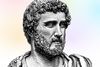
Your mind will take the shape of what you frequently hold in thought.

Marcus Aurelius

Stoic philosophers believed in the power of mind over matter. Former Roman Emperor and Stoic Marcus Aurelius reflected that in his own work, saying the thoughts that occupy our minds ultimately inform the way we live. In this quote, Aurelius underscores the power of practicing consistent, constructive thinking. When we engage in positive reflection, our minds gravitate toward optimism, empathy, and growth. Dwelling on negativity or worry, however, can lead to a more pessimistic and myopic outlook. Aurelius' wisdom highlights the reciprocal relationship between our thoughts and our mental dispositions, reminding us to cultivate mindful awareness of our thinking patterns and to actively choose to pivot our thoughts in a direction that aligns with the life we desire to live.

Marcus Aurelius
Marcus Aurelius
Roman emperor (121-180 CE)
See All Quotes
Advertisement
Advertisement