Fridtjof Nansen
Quotes By Fridtjof Nansen

Advertisement
Featured Image Credit: Topical Press Agency/ Hulton Archive via Getty Images
recommended articles
Custom post type for authors
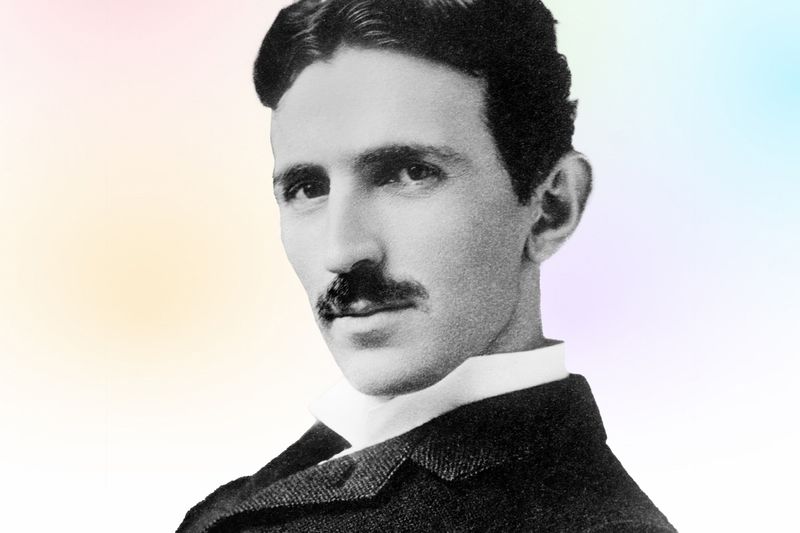
Serbian American inventor, engineer, and futurist (1856-1943)
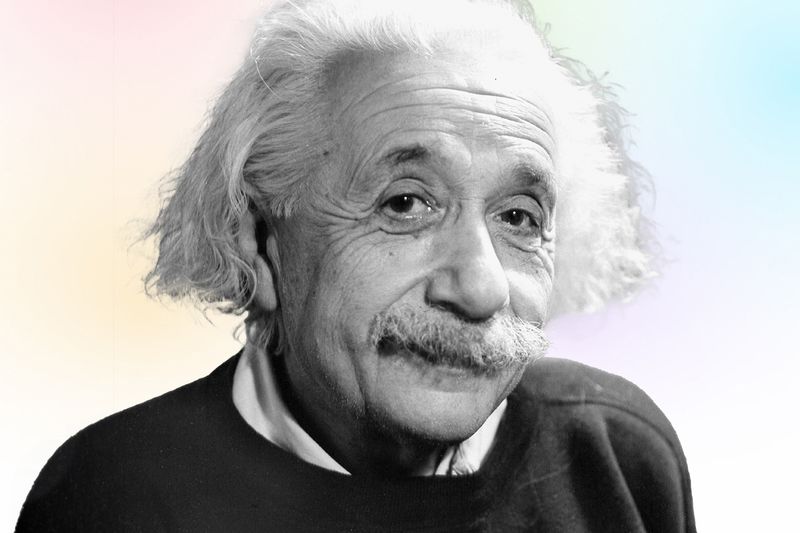
Nobel Prize-winning physicist (1879-1955)
Albert Einstein forever altered humanity’s understanding of the universe. Born in 1879 in Ulm, Germany, Einstein was a curious child from the start. Around age 4, his father showed him a compass that fascinated him; at 10, a family friend introduced the young genius to a set of science and...
Albert Einstein forever altered humanity’s understanding of the universe. Born in 1879 in Ulm, Germany, Einstein was a curious child from the start. Around age 4, his father showed him a compass that fascinated him; at 10, a family friend introduced the young genius to a set of science and mathematics textbooks that left him spellbound. Though he struggled in school and faced a brief period of unemployment, his intellectual curiosity never faltered. In 1905, while working as a patent clerk in Switzerland, the 26-year-old published a series of groundbreaking papers that revolutionized physics. Two of the papers addressed the photoelectric effect and Brownian motion; the other two outlined the special theory of relativity and introduced the famous equation E=mc².
These theories reconfigured the scientific community’s understanding of space, time, and mass-energy equivalence, and challenged the long-running conventions of Isaac Newton’s laws of motion and gravitation. The work earned Einstein a Ph.D. from the University of Zurich and a growing reputation in the scientific community. By 1915, he was back in his native Germany teaching physics; he also completed his general theory of relativity. Four years later, the theory was proven during a 1919 solar eclipse, thus redefining our understanding of gravity and catapulting Einstein to international fame. In 1921, he won the Nobel Prize for physics for his work on the photoelectric effect.
In 1933, Einstein moved to the United States, where he continued to teach until he retired in 1945. In addition to his scientific achievements, Einstein was also a civil rights advocate, a vocal war opponent, and a defender of freedom of speech and thought — ideologies that had him under the watchful eye of the U.S. government. Einstein was always uncomfortable with his celebrity, but he continued his scientific research as well as his outspoken advocacy until his death in 1955 at the age of 76.
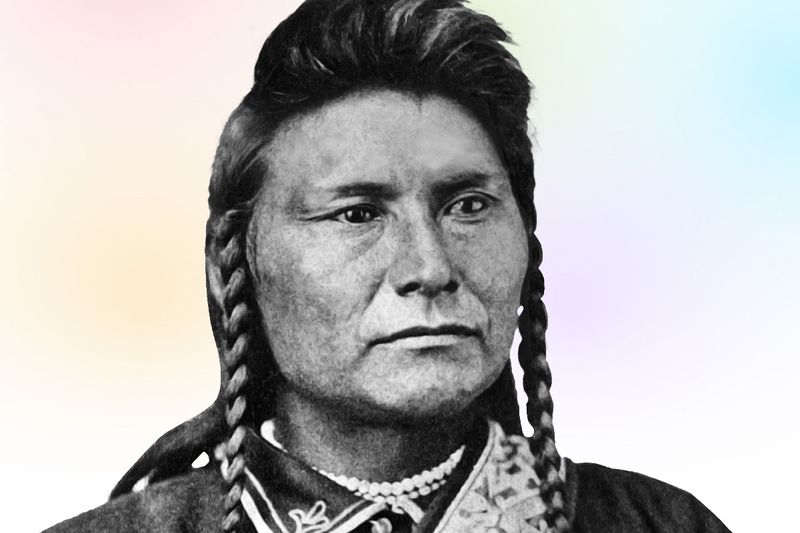
Leader of the Nez Perce (1840-1904)
Writer and publisher (1856-1915)
Though largely unknown by name alone today, Elbert Hubbard profoundly shaped American art and design in the early 20th century. Born in 1856 in Illinois, he tried his hand in several fields, including door-to-door soap sales, mail-order merchandise, advertising, and writing, before founding the Roycroft Press in East Aurora, New...
Though largely unknown by name alone today, Elbert Hubbard profoundly shaped American art and design in the early 20th century. Born in 1856 in Illinois, he tried his hand in several fields, including door-to-door soap sales, mail-order merchandise, advertising, and writing, before founding the Roycroft Press in East Aurora, New York, in 1895. Over time, the printing press blossomed into a creative arts and crafts community. Roycroft represented a way of life, where artisans fostered a DIY ethos and made beautifully handcrafted books, furniture, and more.
Hubbard’s most famous work, the 1899 essay A Message to Garcia, captured his philosophy of hard work and initiative. It became something of an anthem for self-reliance, and inspired other American creatives and craftspeople to value quality over mass production. From the early 1900s until his death in 1915 at age 59, Hubbard was an in-demand lecturer and writer. Although Hubbard’s life was cut short, the Roycroft Campus still stands as a testament to his vision.
Irish poet and playwright (1854-1900)
Oscar Wilde is often remembered as much for his personality — and personal life — as he is for his literary achievements. Born in 1854 in Dublin, Ireland, into an intellectually rich household, Wilde showed his smarts from an early age and often won scholarly awards in grade school. He...
Oscar Wilde is often remembered as much for his personality — and personal life — as he is for his literary achievements. Born in 1854 in Dublin, Ireland, into an intellectually rich household, Wilde showed his smarts from an early age and often won scholarly awards in grade school. He went to both Trinity College and the University of Oxford on scholarship and earned top marks at both. At Oxford, he began exploring creative writing, and in 1878, his poem “Ravenna” won the school’s coveted Newdigate Prize for the best student poem.
After graduating, Wilde moved to London and published his first poetry collection in 1881. His trademark flamboyance and wit blossomed in his high-society artistic circles. In 1882, he embarked on a lecture tour of the U.S. and Canada, where he espoused the aestheticism of the era, advocating that art should be created for art’s sake alone. Upon his return, he married, had two children, and worked as a critic and magazine editor at Woman’s World. His most productive literary years followed: Beginning in 1888, he published the children’s book The Happy Prince and Other Tales, his essay collection Intentions (1891), and his first and only novel, The Picture of Dorian Gray (1891). His first play, Lady Windermere’s Fan, opened in 1892, and three years later, he produced his most renowned play, The Importance of Being Earnest.
Yet even at its peak, Wilde’s success was overshadowed by an affair with English writer Lord Alfred Douglas, a matter that led to his imprisonment in 1895 for homosexuality. After serving his two-year sentence of hard labor, he moved to France, depleted, and wrote his poem “The Ballad of Reading Gaol” in exile. He died three years later in 1900 at the age of 46.