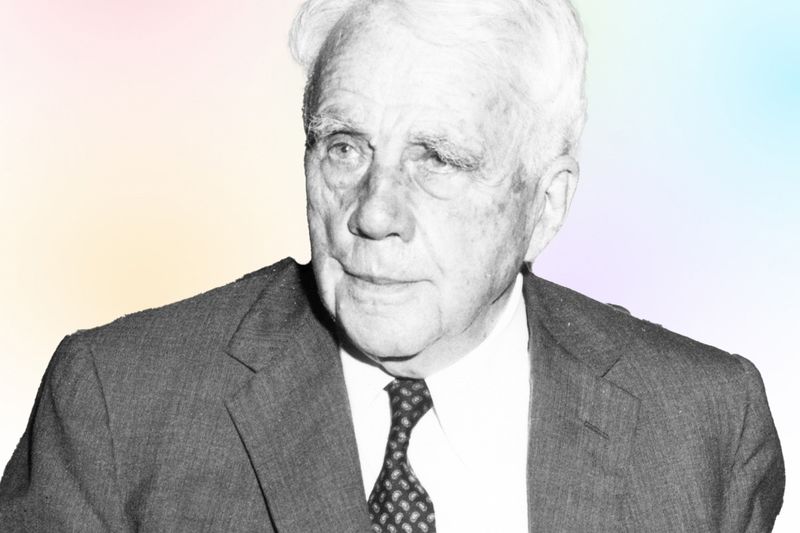
Robert Frost

Pulitzer Prize-winning poet (1874-1963)

Perhaps nothing has immortalized New England’s rugged beauty better than the lyrical poetry of Robert Frost. Born in San Francisco in 1874, Frost moved east to Lawrence, Massachusetts, with his mother and sister after his father’s death. He later attended Dartmouth College and Harvard University without earning a degree, teaching...

Perhaps nothing has immortalized New England’s rugged beauty better than the lyrical poetry of Robert Frost. Born in San Francisco in 1874, Frost moved east to Lawrence, Massachusetts, with his mother and sister after his father’s death. He later attended Dartmouth College and Harvard University without earning a degree, teaching and farming in New Hampshire to earn a living while also continuing to write the poetry he began as a teenager. Though Frost was first published two years after graduating high school, when The New York Independent ran “My Butterfly: An Elegy,” he struggled with rejections for years, finally moving to England in 1912 in search of better opportunities.

Frost’s writing career gained traction when his first collection, A Boy’s Will, was published in England in 1913. His second, North of Boston (1914), solidified his reputation, and upon his return to the U.S. in 1915, Frost found he had become a beloved literary figure. His plainspoken style and rumination on the quieter everyday human struggles earned Frost four Pulitzer Prizes for poetry and a reading at President John F. Kennedy’s inauguration. He died in 1963 at age 88.

Advertisement
Featured Image Credit:  MPI/ Archive Photos via Getty Images

Eleanor Roosevelt

Humanitarian and former U.S. first lady (1884-1962)

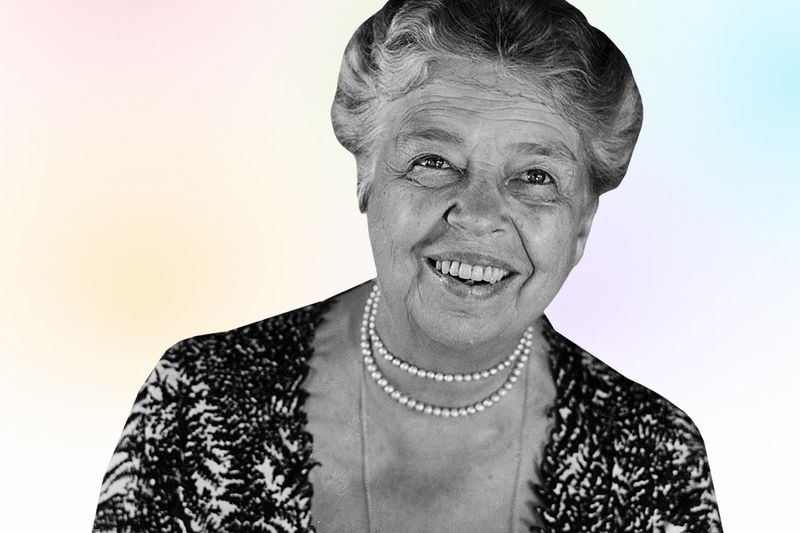
Dubbed the “First Lady of the World” for her humanitarian achievements, Anna Eleanor Roosevelt was born into a prominent New York family in 1884. Her father, Elliott Roosevelt, was the younger brother of President Theodore Roosevelt, and her mother, Anna Hall Roosevelt, came from the prominent Livingston family. Her early...

Dubbed the “First Lady of the World” for her humanitarian achievements, Anna Eleanor Roosevelt was born into a prominent New York family in 1884. Her father, Elliott Roosevelt, was the younger brother of President Theodore Roosevelt, and her mother, Anna Hall Roosevelt, came from the prominent Livingston family. Her early years were marked by tragedy: Both of her parents and one of her brothers died before Roosevelt was 10 years old. Her maternal grandmother took over her care, but her strict ways hardly made for a nurturing home. When Roosevelt was 15, she left home for boarding school in England. There, the headmistress, Marie Souvestre, repaired her morale and greatly influenced her education and worldview. When Roosevelt returned to the U.S. at age 18, she started her lifelong commitment to social good, working with and advocating for marginalized groups in New York City.

After marrying Franklin D. Roosevelt, a distant cousin, in 1905, Eleanor Roosevelt took on the role of a traditional wife and mother. Her inner social consciousness blossomed as she volunteered for various relief agencies during World War I. By the 1920s, her husband was firmly entrenched in the political sphere, and Roosevelt was carving her own path as an active part of the women’s rights movement. After moving to the White House as first lady in 1933, Roosevelt rose to the occasion her new platform provided. She advocated for women’s rights in both political and professional roles and shared her progressive ideals with millions of Americans in her long-running newspaper column as well as hundreds of articles and many books.

After her husband’s death, Roosevelt’s influence only grew. As a delegate with the United Nations, she chaired the U.N. Human Rights Commission and played a pivotal role in drafting the 1948 Universal Declaration of Human Rights. Her dedication to racial justice, freedom of thought and speech, and gender equality continued until her death in 1962 at age 78. In 2023, she was honored by the U.S. Mint’s American Women Quarters Program.

Advertisement
Featured Image Credit:  Bettmann via Getty Images

Paulo Coelho

Brazilian author (1947-present)

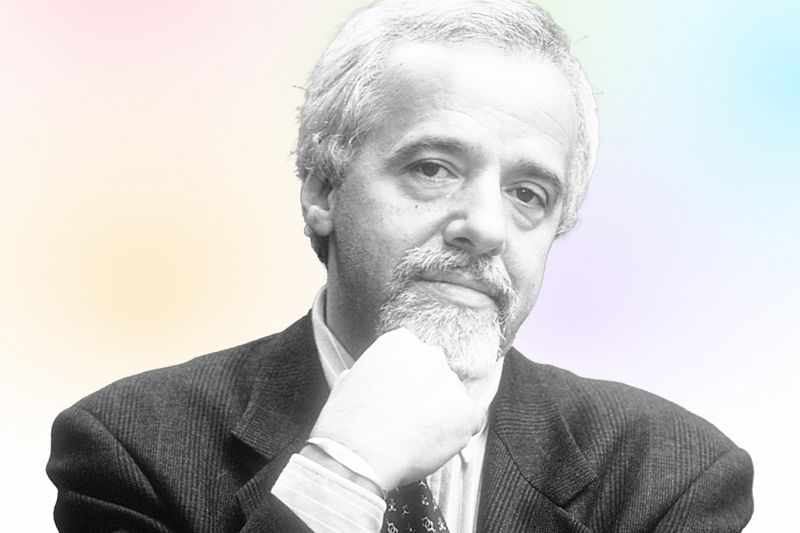
Paulo Coelho has had an extraordinary journey to literary fame. Born in 1947 in Brazil, Coelho’s young life was one of exploration and reinvention. He was a rebellious teenager, and his parents committed him to a psychiatric hospital three times. After his release, he obeyed their wishes and enrolled in...

Paulo Coelho has had an extraordinary journey to literary fame. Born in 1947 in Brazil, Coelho’s young life was one of exploration and reinvention. He was a rebellious teenager, and his parents committed him to a psychiatric hospital three times. After his release, he obeyed their wishes and enrolled in law school. He eventually dropped out, and instead embraced a free-spirited lifestyle during the 1970s. He wrote protest lyrics for Brazilian musicians and was jailed for speaking out against his country’s military dictatorship. 

Coelho drifted between different careers in the music and entertainment industries until in 1986, at 39 years old, his life was changed. While traveling in Europe, he walked more than 500 miles along a historic Catholic pilgrimage route in northwestern Spain. The journey sparked a spiritual awakening and inspired his 1987 book The Pilgrimage. His next novel, The Alchemist, began as a modest success when it was released in 1988, but over time grew into a global phenomenon. Its allegorical tale of self-discovery and pursuing what Coelho calls one’s “personal legend” — one’s true passion and reason for being — resonated with readers worldwide, establishing Coelho as a master of spiritual and philosophical fiction.

Advertisement
Featured Image Credit:  Leonardo Cendamo/ Hulton Archive via Getty Images